Do You Know Your Organization’s Cold Chain Loss Rate?
Key Findings
Executive Summary
Cold Chain Failures Put Lives at Risk
Preventable pharmaceutical losses in cold chain logistics cost the industry an estimated $35 billion per year, and endanger patients who rely on these critical treatments.
Biopharmaceuticals are Booming
Biopharma, the bulk of cold chain pharmaceuticals, is expected to grow its share of total pharmaceutical sales from under 5% in the early 2000s to 46% by 2030, driving more stringent requirements due to the temperature-controlled nature of most shipments.
Strict Oversight Is Essential
Maintaining product integrity requires continuous control of environmental parameters (temperature, humidity, etc.) as well as rigorous chain-of-custody and condition documentation.
Modern Technology Can Help Prevent Losses
Real-time monitoring, IoT-enabled sensors (Internet of Things devices), and predictive analytics provide proactive visibility. Solutions like Zoomlogi empower supply chain operators to identify and prevent failures, saving revenue, reputations, and, most importantly, lives.
68.3%
Share of transit time mail shipments spent outside the targeted temperature range
34%
Greater in-transit time for 3-day shipments than planned
5.1–102.3°F
Actual temperature range observed in transit vs. a 68–77°F target
Every year, millions of lives are put at risk by preventable pharmaceutical losses in cold chain logistics. By Prof. Dr. J. Rod Franklin, P.E., Professor of Logistics Practice at Kuehne Logistics University, formerly Vice President of Product Development at Kuehne + Nagel.
Introduction
Every year, millions of lives are put at risk by preventable pharmaceutical losses in cold chain logistics. Inadequate temperature controls, shipping delays, and limited visibility all contribute to unnecessary waste, and the human cost is immeasurable. Do you know your organization’s cold chain loss rate? As cold chain shipments continue to grow, is your logistics operation ready to tackle these emerging challenges head-on?
Managing pharmaceutical logistics has become increasingly complex¹. Historically, supply chain professionals relied on segregation, environmental controls, access control, and thorough documentation to ensure product stability and efficacy, an approach that, while somewhat cumbersome, worked for relatively stable products requiring minimal technical oversight. However, with the rise of cold chain pharmaceuticals, and biopharmaceuticals in particular, since the early 2000s, GMP guidelines began demanding far stricter controls across every stage of production and delivery.
Today’s pharmaceutical products must comply with stringent regulations to maintain stability and efficacy. Producers must scientifically determine and document all conditions, from packaging to transit environments, under which their products remain viable. Typical specifications include acceptable temperature ranges, allowable time out of range, and continuous documentation requirements, including detailed chain of custody. If any defined parameters are breached, the supply chain operator must immediately inform the manufacturer, clarify the reason for the excursion, and outline corrective actions.
Cold Chain Pharma: A Growing Logistical Challenge
The increasing share of biopharmaceuticals has raised the bar on requirements for proper management of transport and storage operations. Since the early 2000s, biopharmaceuticals have jumped from under 5% of the total pharmaceutical market to a projected 46% by 2030. With an annual growth rate of about 12%, the global biopharmaceutical market is expected to nearly double in size between now and 2030 (Figure 1)².
Fig. 01 Biopharmaceuticals market size (USD B)
Biopharmaceutical Market Growth³ — solid bars actual, outlined bars projected; the market is expected to nearly double between 2024 and 2030.
Central to meeting these demands is the cold chain: controlled-temperature storage and transport designed to safeguard product quality. Depending on the specific biopharmaceutical, cold chain requirements may include:
Controlled Room Temperature (15°C–25°C): for stable drugs
Refrigerated (2°C–8°C): common for vaccines and general medicines
Frozen (-20°C or below): for drugs needing sub-zero environments
Ultra-Cold (-80°C to -130°C): for certain mRNA- and cell-based therapies
Deep-Freeze (-150°C): critical for genetically modified cell treatments⁴
A $35 Billion Price Tag of Failure
The challenges that managing a cold chain poses for today’s supply chain professionals are significant. One might think that with experience the potential for failures would drop. While reliable estimates for the current pharma cold chain do not exist, a study of the pharma cold chain by IQVIA in 2019 estimated that the cost of poor cold chain management was approximately $35 billion (about 10% of the global biopharmaceutical market). This figure included not only the actual cost of the scrapped product, but the cost for recovery and reshipment of the drugs. The general figure of 10% loss of pharmaceuticals in cold chain activities is held as an acceptable average loss figure for cold chain shipments. However, in emergency situations such as the Covid-19 pandemic, higher wastage factors are considered acceptable⁵. While GAVI, the international vaccine distribution organization, recommended that wastage rates of up to 25% should be expected in the early stages of the Covid-19 pandemic, actual wastage of vaccines in the United States exceeded 30%. Many factors contributed to this high wastage rate (multi-dosage vials, poor demand forecasting and over ordering, etc.). However, cold chain issues were a significant contributor due to the extreme temperatures required by several of the vaccines and the short shelf life of these vaccines⁶.
Why Your Cold Chain Might be Failing
Cold chain managers face challenges due to diverse regulatory requirements, complex supply chains, strict control parameters, and multiple handoffs from source to destination. This dynamic creates key gaps for pharmaceutical companies in selecting the most efficient infrastructure (packaging, routes, cold chain service providers, etc.) to ensure compliance with regulations. Each step in the movement of a cold chain product from its source of production to its final consumption point must be monitored and each controlled parameter documented. Any deviation requires immediate reporting and mitigation. Parameters that require monitoring include temperature, light, shocks, humidity, oxygen levels, pressure, and vibrations.
Monitoring each of the parameters established by the manufacturer to assure the quality of their product means installing certified freezers and coolers, reliably calibrated sensors, proper data logging systems, controlled and certified packaging, detailed distribution and route planning, and detailed operational procedures.
In addition, what must be monitored and reported on⁷ must adhere to various regulations that are not standardized or clearly defined⁸. Individuals tasked with operating these cold chains require extensive and ongoing training to ensure that they do not induce human failure in the processes.
To provide manufacturers and supply chain professionals with guidance on how to manage their cold chains, the International Standards Organization established ISO 23412:2020 for the land transport of cold chain parcels by local transport organizations and ISO 21973:2020 for the general transport of biological pharmaceutical products for human use. These two standards, while focused on different aspects of cold chain delivery, both address requirements for planning, operational control, maintenance, quality control, documentation, and training.
However, neither of these standards, as one might expect, address regulatory variations in what must be monitored and controlled, nor in what the manufacturer defines as parameters to be controlled. These last two items must be addressed by the supply chain operator for each product/market in which they operate their cold chain.
Research studies have shown that the complexity of operating a cold chain for pharmaceuticals leads to many opportunities for failure. These failures arise due to equipment failure, human errors, variability of standards, facility variability, shipment security, package failure, weather conditions, in transit delays, and other unplanned risks. Failures also arise due to extended supply chains employed for modern biopharmaceutical production (Figure 2). As noted previously, these failures are costly from an economic perspective, but they are also costly from a human perspective.
Fig. 02 Global pharmaceutical supply chain example

Medications are developed to treat illnesses in patients who rely on them to be both effective and delivered on schedule. However, if a drug is compromised by a cold chain failure, it may lose potency or produce inconsistent results, potentially harming the patient’s health. For personalized therapies designed for a specific individual, any lost or damaged product means the patient faces further treatments, longer delays, and, in critical cases, might not receive the medication in time to prevent serious consequences. These setbacks also create legal liabilities, increase costs, and harm the pharmaceutical company’s reputation, further contributing to the already fragile trust consumers have in the industry¹⁰.
It does not have to be this way
Addressing these issues demands that supply chain organizations follow ISO 21973:2020, that manufacturers and regulators provide clear control requirements, and that all transport and storage partners maintain continuous, real-time monitoring of product condition, custody, and identity. Without these safeguards, “dark” zones in the cold chain can emerge.
With advancements in modern technologies like IoT devices, AI, and the widespread adoption of API standards, the challenge is no longer collecting data but making sense of it. One must identify patterns across multiple, often siloed, data streams, including sensors, packaging, telematics, GPS, providers, cargo locations, and customs, while navigating the complex compliance and regulatory requirements of the pharmaceutical industry.
Third party startups, such as Zoomlogi, a new cold chain visibility and intervention software provider, can help all parties involved monitor the real-time status of their product as it traverses the cold chain. Using advanced proactive and predictive monitoring capabilities, such as those offered by Zoomlogi, can help protect an organization’s supply chain operations. The economic and human loss impact from not acting can be material to a company’s bottom line and brand reputation.
Technology does not replace human and operational excellence. However, it moves an organization away from hoping that someone or something does not fail, by providing an opportunity for pro-active measures to be applied in real-time when products are at risk of a potential excursion or delay.
"Sometimes the couriers aren't incentivized to tell you exactly everything that's happening in a timely manner"
Prof. Dr. J. Rod Franklin, P.E. – Kuehne Logistics University
Case study¹¹
Between December 2019 and September 2020, a group of researchers conducted a study of mail delivery of pharmaceuticals requiring temperature-controlled distribution. Data loggers were placed in the packages labeled as pharmaceuticals requiring temperature control during shipment. Packages were shipped between New Jersey, California, and Tennessee. The temperature control range was specified as between 68°F and 77°F (or 20-25°C) per Pharmacopeia <659>. Shipments were made based on varying delivery schedules of next day and 3-day shipments.
Evaluation of the logged temperature exposure of the packages revealed that the packages spent 68.3% of their time outside of the controlled temperature range (Figure 3). Packages shipped via the 3-day schedule spent more time out of range than the next day packages and more time in transit than planned (34% greater in transit time). Temperatures ranged from 5.1°F to 102.3°F (Figure 4).
The conclusion of this research effort was that the package temperatures were outside of the recommended range during most of their transit time regardless of shipping method, carrier, or season. This research study reflects a significant problem in cold chain management where gray zones arise because regulatory oversight does not exist. In this case, the shipment of pharmaceuticals through the mail and courier systems in the U.S. to end consumers, regulations are absent although certain standards (e.g., ISO 23412:2020) do exist. Such gaps in cold chain oversight arise in many situations and indicate the need for greater diligence on the part of pharmaceutical companies if they are to avoid the negative consequences of less effective or wasted products.
Fig. 03 % of time shipments are within targeted temp range
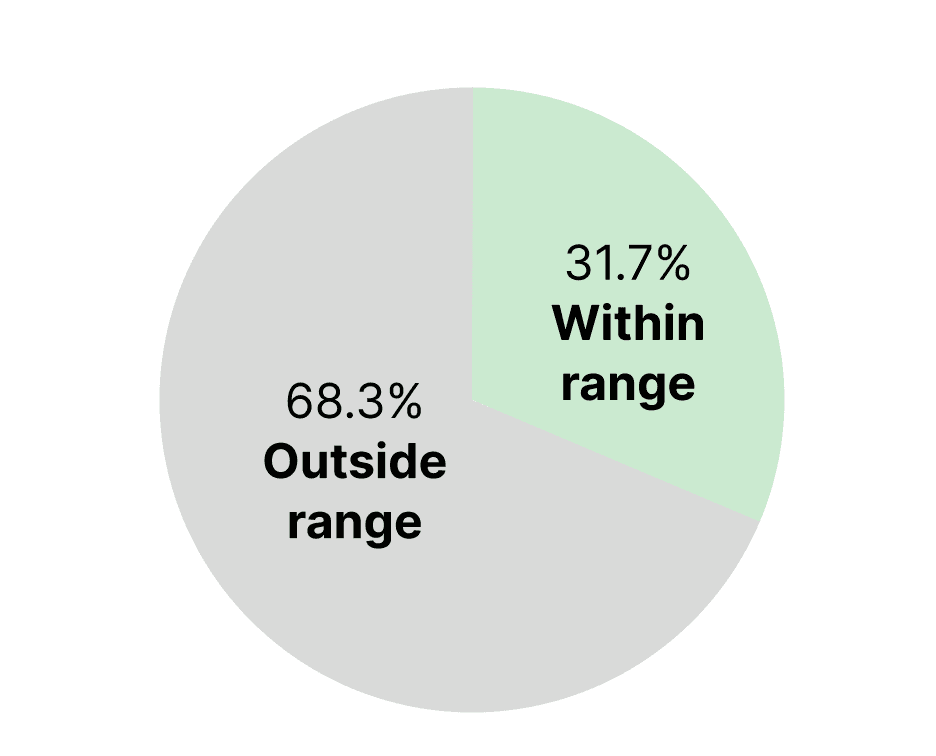
Fig. 04 Target temperature range during transit vs. actual range observed

Take Action
Three steps to take today
01
Establish your baseline
Measure current coordinator hours spent on exception management per week, your average time-to-resolution by exception type, and your chain-of-custody completeness rate. You cannot improve what you have not measured.
02
Audit your alert workflow
For the last 30 days, what percentage of your alerts required human action to resolve? What action did that require? If you cannot answer this from platform data, your current system is not capturing the operational record you need.
03
Ask vendors for zero-touch rates
When evaluating any logistics platform, ask for the zero-touch exception resolution rate across their customer base, broken down by exception type. A credible AI-native platform will have this data. A visibility platform with bolted-on AI will not.
RF
Prof. Dr. J. Rod Franklin, P.E.
Professor of Logistics Practice, Kuehne Logistics University
Prof. Dr. J. Rod Franklin is Professor of Logistics Practice at Kuehne Logistics University. In his roles at the Kuehne Logistics University Prof. Franklin teaches classes in innovation, operations, decision and data analysis, game theory, mathematical modeling and critical thinking to graduate students and logistics professionals. His research focuses on supply chain efficiency, sustainable operations, data analytics, the Physical Internet and application of digital technologies to supply chain management. Prof. Franklin’s research has received funding from the European Union, industry, other universities and international logistics organizations. Prior to his role as Professor of Logistics Practice, Prof. Franklin was Vice President of Product Development at Kuehne + Nagel, one of the world’s leading transport and logistics companies with 81,000 employees and 1,300 locations.
About Zoomlogi
Zoomlogi is an AI-native operating system for healthcare and life sciences logistics. The platform provides real-time shipment visibility, predictive risk detection, automated exception resolution via AI voice and email agents, and white-label visibility portals for sponsors, sites, and patients. Zoomlogi is trusted by Fortune 100 companies including manufacturers, logistics providers, pharmacies, and labs. Learn more at zoomlogi.com.
References
Thaul, S. (2013), Pharmaceutical Supply Chain Security, Congressional Research Service Report #R43106
visionresearchreports.com/pharmaceutical-market, accessed 4 January 2025
Patil, R. and A. Shivakar (2024), Biopharmaceutical Market Size and Manufacturer’s Report (2021–2023), TowardsHealthcare.com
USP Chapter <1079> Good Storage and Shipping Practices
Shorten, T. et al. (2022), Evaluation of Gavi’s Initial Response to Covid-19, EuroHealth Group, vol. 1
Bajrovic, I. and M. Croyle (2023), “Challenges in Vaccine Transport: Can we deliver without the cold chain?” Expert Review of Vaccines, vol. 22, no. 1, pp. 933-936
Retention periods vary for reports; can be 5+ years long for certain critical records 21 CFR 5.195
ASHP Executive Forum on Cold Chain Management (2022), Resource Guide #1: Pharmaceutical Cold Chain Management in Health Systems, American Society of Health System Pharmacists
Bajrovic & Croyle, 2023
news.gallup.com/poll/610641/retail-pharmaceutical-industries-slip-public-esteem.aspx, accessed 6 January 2025
Chowdhury, D.A. et al. (2023), “Evaluation of temperature excursions from USP <659> recommendations during mail transit,” Journal of the American Pharmacists Association, vol. 63, pp. 847-852.